
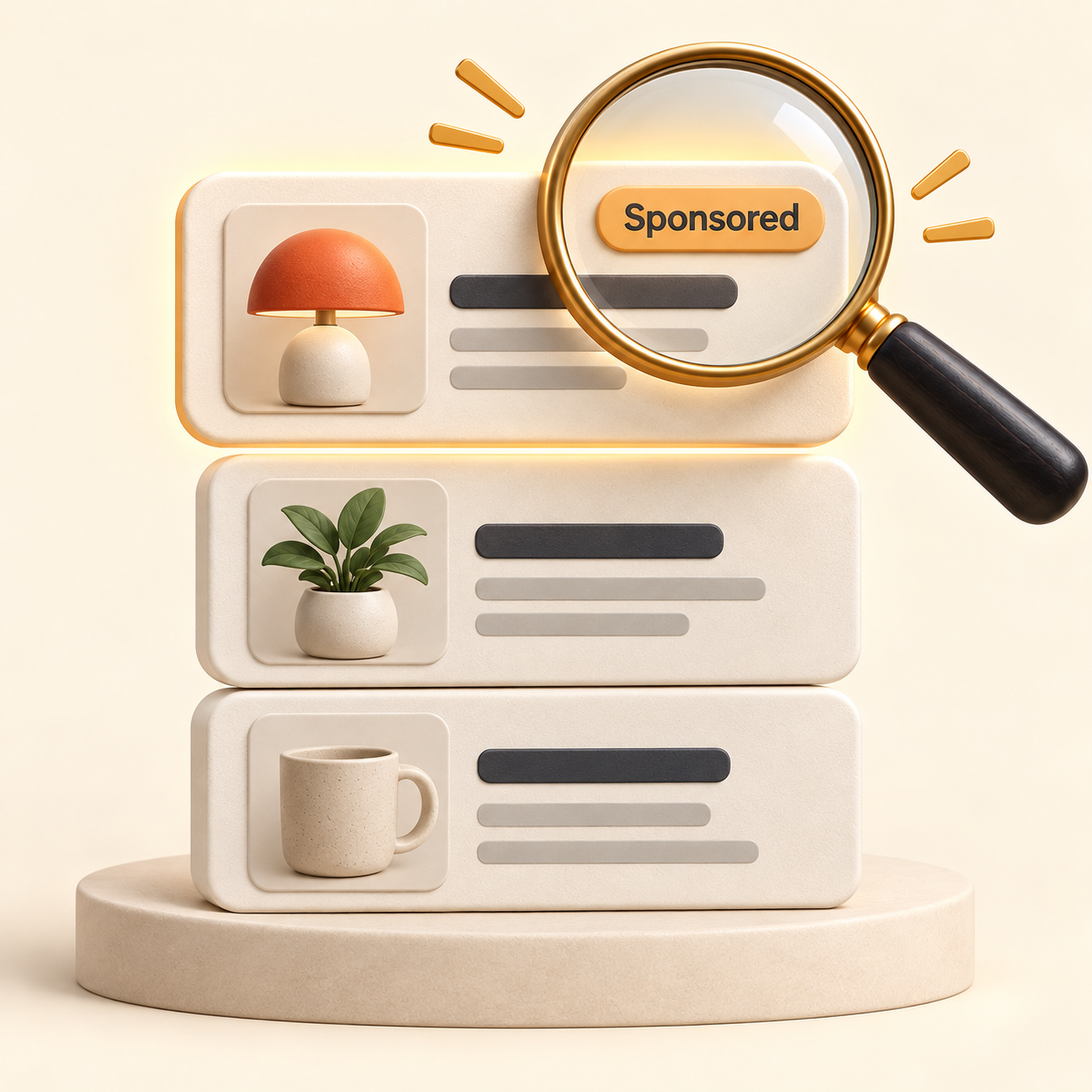
You type "phone charger" into Amazon. The first result looks perfect, so you click it. Maybe you don't even scroll.
Sound familiar? Most of us treat the top of the results like a recommendation, as if Amazon looked at everything and put the winner first.
Sometimes that's not what's happening. Sometimes that spot was paid for, and one small word tells you which: "Sponsored."
What "Sponsored" Means on Amazon
It means a seller paid to have that listing shown to you. It's an ad that looks a lot like a regular search result.
The label doesn't mean Amazon picked the product for you, and it doesn't mean Amazon recommends it over anything else on the page. It means someone paid for visibility.
How the Ads Work
Sellers choose which searches they want to show up for, and they set the most they're willing to pay when someone clicks. A higher bid makes an ad more likely to appear when it matches what you searched for.
The seller pays when a shopper clicks the ad, not just because it appeared, according to Amazon's own advertising pages.
So what shows up first is shaped by who chose to pay for that search, not only by how well a product matches it.
Where You'll See Sponsored Listings
Not always at the very top. Amazon says these ads can appear above, alongside, or within search results, and on product pages too. They come in a few forms:
- Single product listings. These look like normal results, with a small label.
- Banner-style ads. A brand logo, a headline, and a few products in one row.
- Video ads. Short clips that can play right in the results.
- Suggestions on product pages. Sponsored items shown further down the page you're already on.
How to Spot Them
Look for the word "Sponsored," usually in small, light text near the product title. The exact spot can differ by Amazon site and by device, so it may sit somewhere slightly different on your phone than on your laptop. Brand banners and videos are ads too, so check for the label there as well.
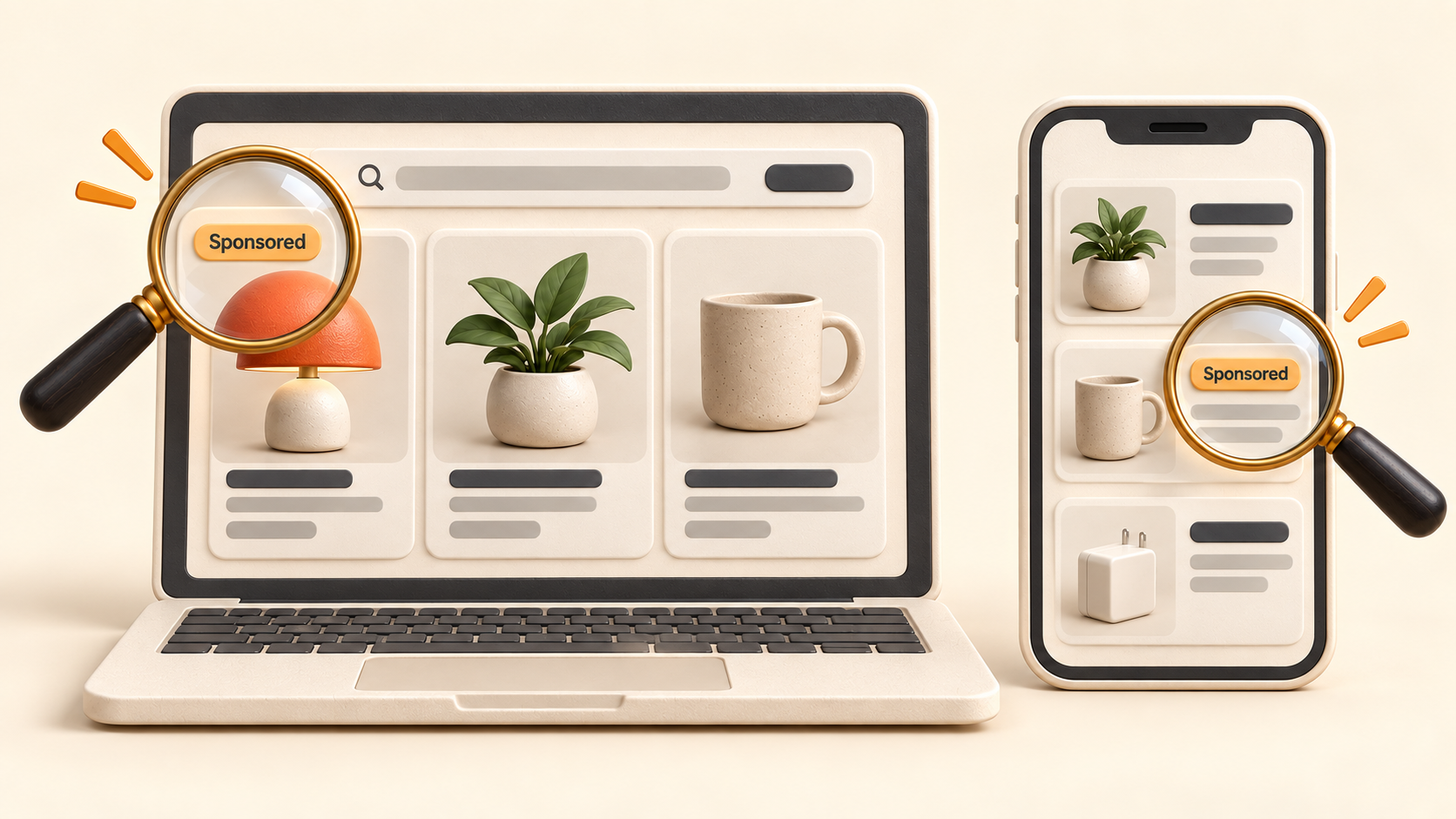
Once you start looking, you'll see it everywhere.
What the Label Doesn't Tell You
A sponsored listing isn't automatically a bad product. Plenty of good sellers pay for visibility, especially newer ones trying to get noticed. The label says the placement was paid for. It says nothing about quality in either direction.
The reverse is true too. A listing without the label isn't automatically better. Amazon ranks regular results with its own system, and it doesn't share exactly how that works.
"Sponsored" also isn't the same as the "Amazon's Choice" badge. They're separate labels that mean different things, and we break that one down in What Does Amazon's Choice Actually Mean?
How to Shop With This in Mind
You don't need to avoid sponsored listings. The top spot just shouldn't be the only thing you go on. A few habits help:
- Scroll past the first few results before you click. It takes seconds.
- Open more than one listing that fits what you need.
- Check the details yourself: size, model, and what's in the box.
- Read the seller and shipping info, plus the return terms. Here's how to read the "Sold by" and "Ships from" lines.
- Skim recent reviews for comments about the things you care about.
None of it needs special tools. It just takes a habit of looking.
The Decision Is Yours
Some people want the first thing that fits and move on. Others compare a handful before choosing. Either way is fine. What matters is knowing which results are ads, so the choice is really yours.
Frequently Asked Questions
What does "Sponsored" mean on Amazon?
It means a seller paid for that listing to be shown. It's an ad, not a recommendation from Amazon.
Does the seller pay every time I see a sponsored listing?
No. Amazon describes these as pay-per-click ads, so the seller pays when someone clicks.
Does Amazon recommend sponsored products?
No. The label marks a paid placement. It doesn't mean Amazon picked or endorsed the item.
Are sponsored products lower quality?
Not necessarily. Paying for visibility says nothing about quality either way, so check the listing yourself.
Are sponsored listings always at the top of the results?
No. They can appear at the top, alongside the results, mixed in among them, and on product pages.
Is "Sponsored" the same as "Amazon's Choice"?
No. Sponsored marks a paid placement. Amazon's Choice is a separate badge, which we explain in What Does Amazon's Choice Actually Mean?