
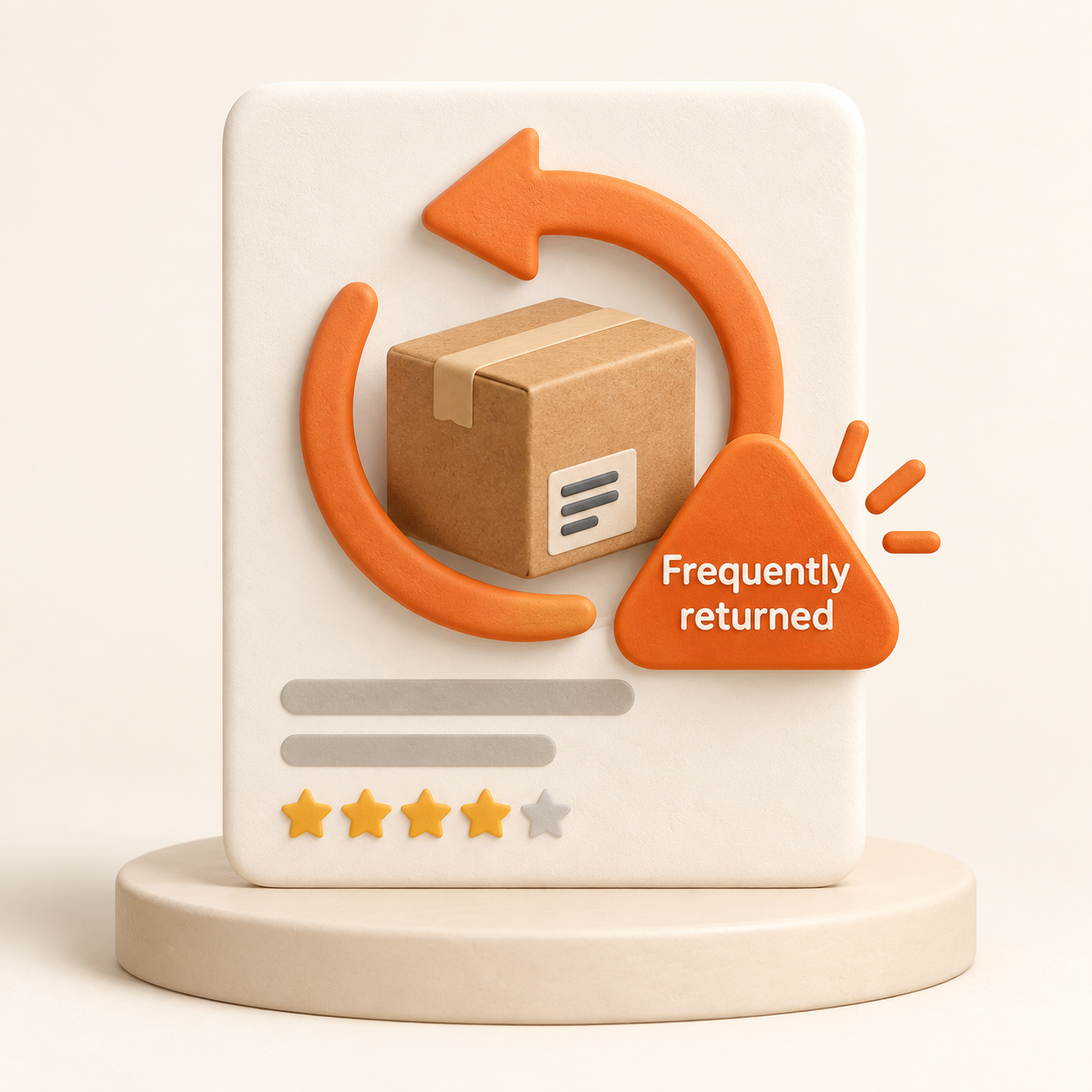
You're one click from buying. Then you spot it: a small note on the page saying this item is frequently returned.
Now what? Some people back out on the spot. Some scroll right past it. Most of us land somewhere in between, a little uneasy and not sure how seriously to take it.
That's a fair reaction. The label says less than you might think, but more than nothing.
What the Label Means
Amazon shows this note on a product page when the item's return rate is higher than similar products in its category. Return rate compares how many units were shipped with how many customers sent back.
The note also nudges you to look at the product details and customer reviews before you buy. That's the whole message. It's a prompt to look closer, not a ban and not Amazon telling you to skip the item.
How Amazon Decides
Amazon hasn't shared the exact cutoff with shoppers. Sources that follow the label describe it as a comparison against similar products in the same category, which makes sense, since some categories get returned more than others. Clothing gets sent back for fit all the time. Groceries rarely do.
Those same sources say the label sits on the product page as a whole, not on each color or size separately. So a similar-looking listing may or may not carry it. Each one has its own return history.
What It Doesn't Tell You
The label says returns are higher than usual. It doesn't say why.
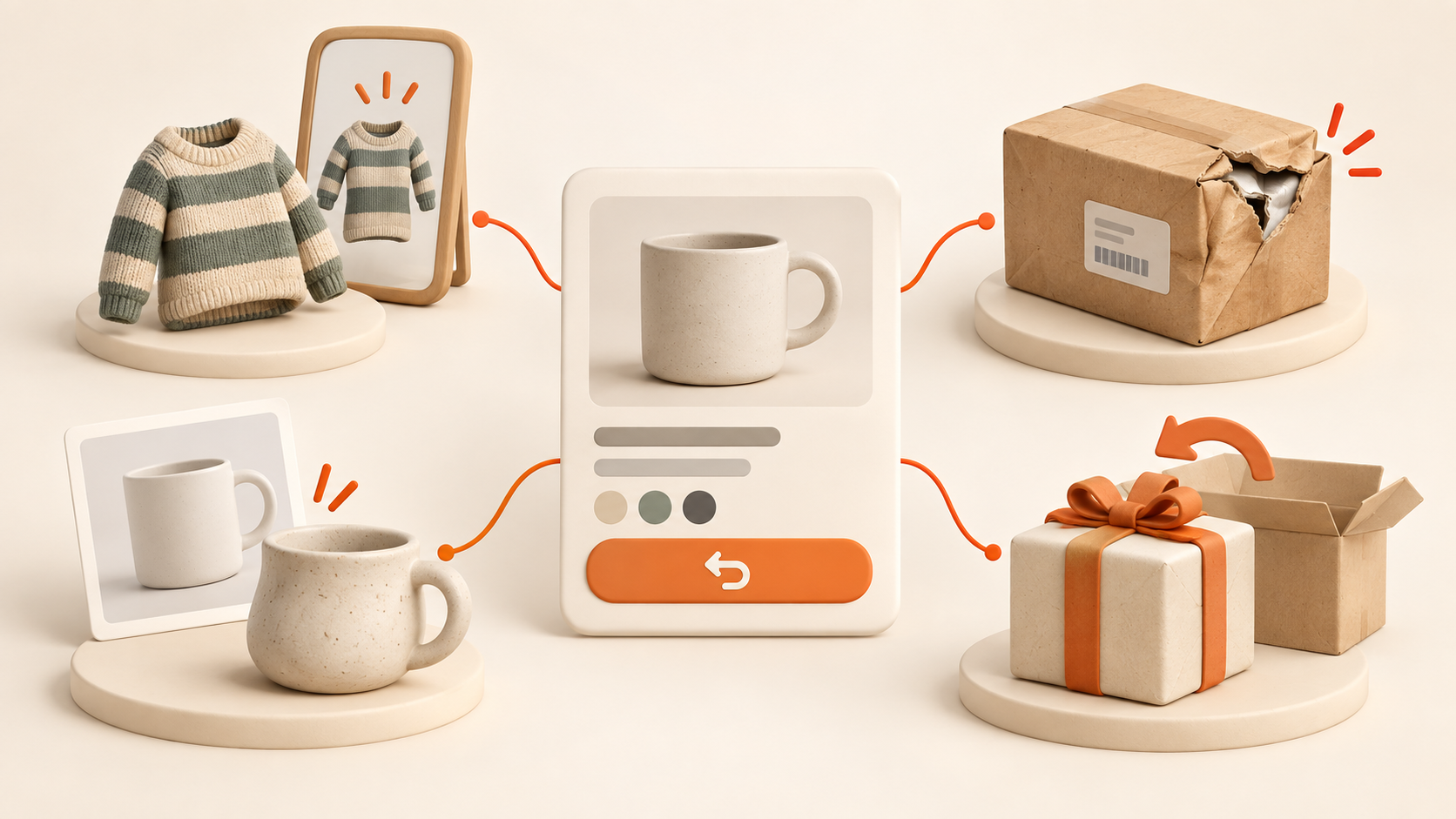
People return things for plenty of reasons. Wrong size, a gift that missed, a change of mind, damage in shipping, or a product that didn't match its photos. Only some of those point to a real problem with the item. Some sellers have also said in Amazon's own forums that returns caused by shipping damage can count toward the label, and return rates can climb around the holidays when gifts come back.
It also works in one direction only. A listing without the label isn't automatically free of problems. It may just not have crossed Amazon's line, or the label may not show on your Amazon site at all.
How to Dig Deeper
The label tells you to check the details and reviews, so do exactly that:
- Read the 2-star and 3-star reviews first. They tend to explain what's going wrong. Look for the same complaint showing up more than once.
- Match the complaints to the description. If reviewers say it runs small or doesn't match the photos, check the size chart and specs.
- Decide if the problem matters to you. A sizing issue you can plan around is different from a product that breaks in a week.
- Read the return terms on the listing so you know what happens if you do need to send it back. Here's how to read the "Sold by" and "Ships from" lines and what they mean for returns.
- Open one or two other listings that fit what you need and see whether the same complaints appear there too.
Keep in mind that reviews aren't perfect either. Here's how to tell if an Amazon review is fake.
The Opposite Label
Some listings show the flip side: "Customers usually keep this item." It works the same way, as one more signal based on return data. It's a helpful clue, not a guarantee.
The Call Is Yours
Some shoppers skip anything with a warning on it. Others read the reviews, find the complaint doesn't apply to them, and buy anyway. Both are reasonable. The label just gives you something to look at before you decide, and the decision is yours.
Frequently Asked Questions
What does "Frequently Returned Item" mean on Amazon?
It means the item's return rate is higher than similar products in its category. Amazon uses it to nudge shoppers to check the details and reviews first.
Does the label mean the product is bad?
Not necessarily. It says returns are higher than usual, not why. Reasons vary, so read the reviews to see what's behind it.
How does Amazon decide which items get the label?
Amazon hasn't published the exact cutoff for shoppers. Sources describe it as a comparison with similar products in the same category.
Does a listing without the label mean it's fine?
Not necessarily. The label may not appear on every product or every Amazon site, and a listing can still have issues without it. Read the reviews either way.
What does "Customers usually keep this item" mean?
It's described as the opposite signal, also based on return data. It's a clue, not a guarantee, so still check the listing yourself.